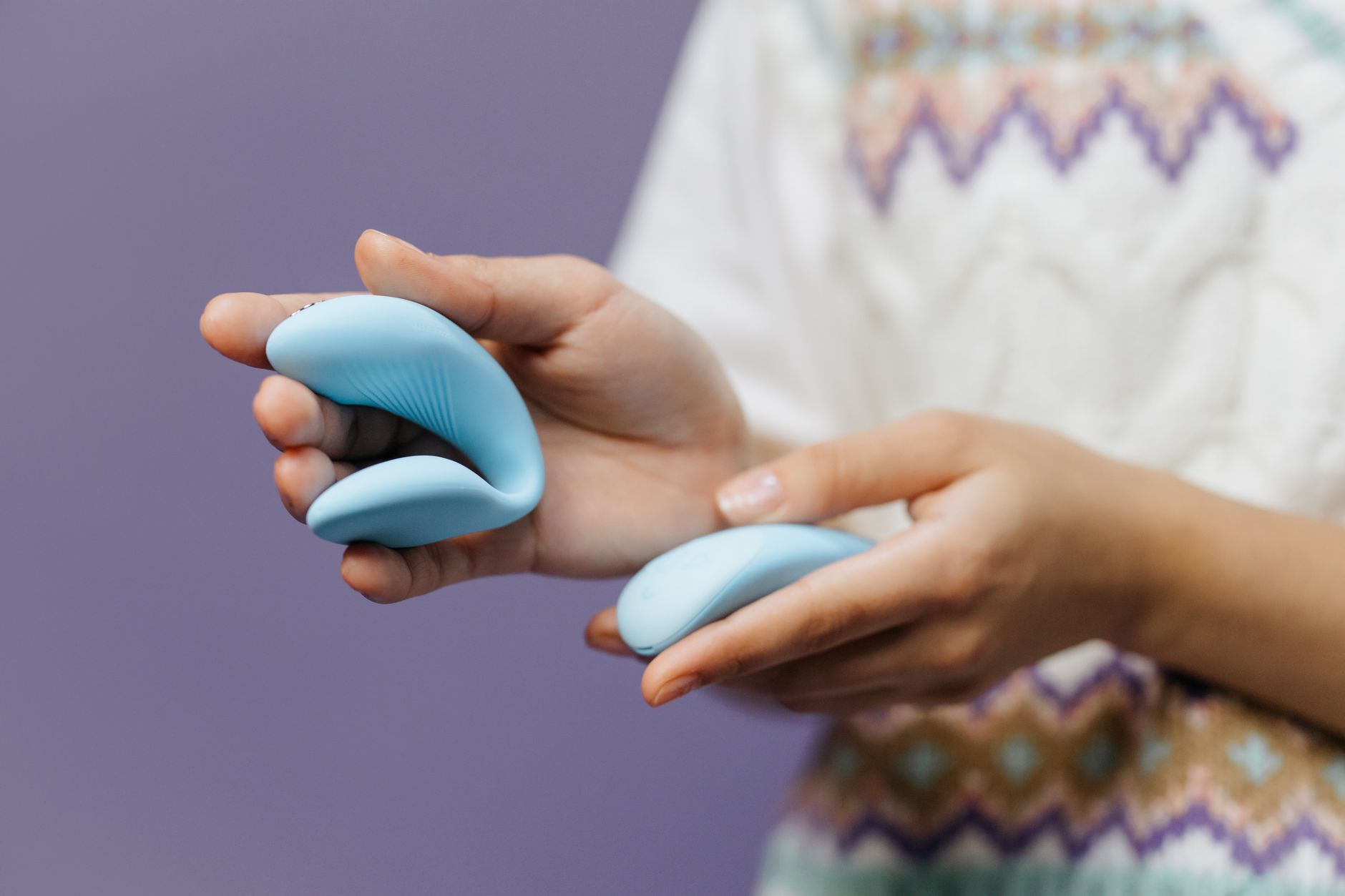
Your cycle is not a bug. It's your body's operating system.
Here's the thing: most people treat their menstrual cycle like an inconvenient monthly reset they have to work around. But your cycle is actually a 28-day arc of shifting hormones that changes everything about how pleasure works for you, from arousal speed to orgasm intensity to sensitivity itself. And if you're using a clitoral vibrator like the Lem, understanding that arc is the difference between wondering why some days feel better than others and actually designing your pleasure around what your body is doing right now.
I've worked with hundreds of people navigating this, and the pattern is always the same: they assume their vibrator isn't working, when really their body is just operating in a different mode.
Follicular phase: The high-energy window (Days 1-14)
Estrogen is climbing. Your body is literally preparing for ovulation, and that means your nervous system is more responsive, your blood flow is increasing, and your clitoral tissue is becoming more sensitive. For many people, this is the phase where orgasms come fastest and feel most intense.
What shifts: Arousal builds more quickly. You might need less warm-up time than other phases. Some people find that higher intensity settings on their vibrator feel amazing right now, whereas they'd feel overwhelming in other phases.
How to use lemon vibrators during this phase: This is your window for experimenting. If you've been curious about a higher pattern you usually skip, this is the phase to try it. Start at your usual setting, but you might find you're ready to move up intensity faster than usual. Pay attention to what feels different. Many people report that the Lem's suction sensation feels particularly pleasurable during this phase because the tissue is more engorged and responsive. Don't be surprised if your usual routine feels too gentle.
Ovulation: The peak sensitivity window (Days 12-16)
Your estrogen hits its peak right before ovulation. Your testosterone surges too. This is the phase where desire often peaks most noticeably, and where sensitivity can actually become so heightened that what felt perfect last week now feels too intense.
What shifts: You might experience heightened sensitivity to touch. Some people find their clitoris feels almost swollen. Orgasms can build faster and feel deeper. But here's the twist: sensitivity and pleasure aren't the same thing. Higher sensitivity doesn't always mean higher pleasure.
How to use lemon vibrators during this phase: Start lower than you think you need to. Your tissue is primed and ready, so you don't need as much stimulation to reach the same level of sensation. If you normally use patterns 4-5, try starting at 2-3 and working up. This phase is also ideal for longer sessions. Take your time. Many people find that during ovulation, they can reach orgasm multiple times more easily, so give yourself permission to explore. The Lem works beautifully here because you can adjust intensity smoothly without jarring transitions.
Luteal phase early (Days 17-21): The patience phase
Progesterone starts rising. Estrogen drops. Your body is shifting into a slower metabolic state. Arousal doesn't disappear, but it works differently now. It takes longer to build, and it requires more sustained stimulation.
What shifts: You might notice you need more time to warm up. Direct clitoral stimulation might feel less immediately pleasurable than it did a week ago. Some people experience heightened sensitivity in their breasts or a desire for different kinds of touch. Orgasms are still absolutely possible, but they often require more intention.
How to use lemon vibrators during this phase: Budget extra time. If you usually spend 10 minutes, plan for 15-20. Start at a medium intensity and stay there longer rather than jumping between settings. The Lem's consistent, deep stimulation works particularly well here because it's not about speed, it's about sustained pressure. Some people find that longer sessions, even at lower settings, produce more satisfying orgasms during this phase. This is not a phase where you're broken. This is a phase where arousal works more like a slow build than a quick spark.
Luteal phase late (Days 22-28): The restoration phase
Progesterone peaks and then crashes as you approach menstruation. Estrogen is low. Your body is in its most introspective state. For many people, this is when solo pleasure feels most nourishing, even if partnered sex feels less urgent.
What shifts: Desire might be lower. Sensitivity can feel muted. But here's what often surprises people: orgasms during this phase can feel incredibly grounded and emotionally satisfying, even if they're not as fast or intense as earlier in the cycle. You might find that you want different kinds of stimulation entirely.
How to use lemon vibrators during this phase: Think restoration, not performance. Use your vibrator as a tool for self-care rather than chasing a specific outcome. Start slow, stay patient, and don't measure success by how quickly you orgasm. Some people find that this phase is actually ideal for exploring what their body genuinely wants versus what they think they should want. If you're not feeling particularly aroused, that's normal and okay. The Lem is still useful here, but it might be one part of a longer, more sensual experience rather than the main event. Some people add external touch, music, or extended warm-up to this phase.
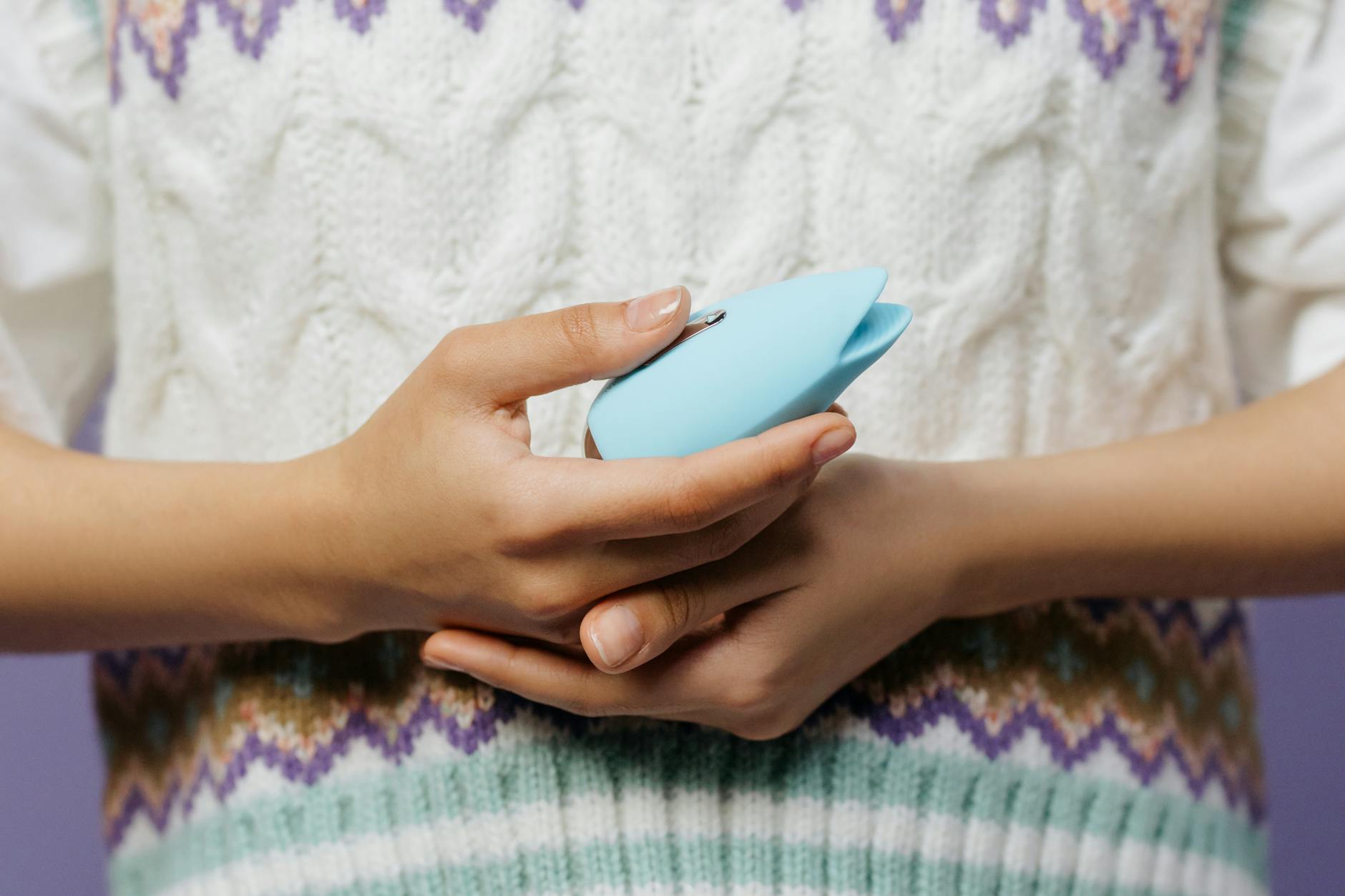
Photo by cottonbro studio on Pexels
What actually changes versus what you think changes
Here's what I want to be crystal clear about: Your capacity for pleasure doesn't change across your cycle. Your clitoris doesn't lose sensation. Your ability to orgasm doesn't disappear. What changes is the speed, intensity, and type of stimulation your nervous system is most responsive to.
That distinction matters because if you assume your vibrator is broken or that you're broken, you'll abandon a tool that actually works brilliantly when you understand how your body operates. It's not that the Lem stops working during your luteal phase. It's that your nervous system is operating in a different mode, and the tool works differently in that mode.
Tracking what actually shifts across your cycle is one of the most underrated forms of self-knowledge. You don't need an app. Just spend two or three cycles paying attention to what feels good and when. You'll start noticing patterns that are uniquely yours.
The partner conversation that actually helps
If you're partnered, communicating about this is useful. But here's what doesn't work: "I'm ovulating so my arousal is weird." What works is specificity. "This week I'm needing more warm-up time, so can we plan for longer?" Or: "Right now my sensitivity is higher, so I want to start at a lower intensity."
Most relationship friction around this stuff comes from assuming that if something worked last week, it should work this week. Your partner might not realize you're in a different phase. Telling them specifically what helps right now removes the guesswork and the pressure.
FAQ: Your cycle and vibrator use
How much does my cycle actually affect how my vibrator feels?
More than most people realize. Hormonal changes affect blood flow, tissue thickness, and nervous system responsivity. Some research suggests sensation can vary by up to 30 percent across the cycle, and arousal buildup can shift from 5 minutes to 25 minutes depending on where you are. Individual variation is huge, so tracking your own patterns matters more than any generalization.
Should I use my vibrator on my heaviest flow days?
Yes, if you want to. Menstruation doesn't make a clitoral vibrator unsafe or less effective. The clitoris is external and doesn't have a direct connection to your flow. Some people find that orgasms during menstruation help ease cramps. Others feel less interested in pleasure during their heaviest days, and that's fine too. Go with what actually appeals to you, not what you think you should do.
Can using a vibrator too much during my follicular phase affect my cycle?
No. Your vibrator won't disrupt your hormonal cycle. Your cycle is controlled by your brain and reproductive system, not by external stimulation. Use your vibrator as much as feels good.
Does tracking my cycle improve my pleasure with a vibrator?
Absolutely. Most people don't realize that what felt mediocre last week might feel amazing this week, or vice versa. Tracking doesn't have to be complicated. Just notice: "This week I was ready faster" or "This week I needed way more warm-up." After two cycles, patterns emerge. That's when you can intentionally adjust how you use your lemon vibrator depending on where you are.
What if my cycle is irregular?
The phases still happen, they're just less predictable. Track by symptoms rather than dates. You'll still notice when arousal shifts, when sensitivity changes, and when your body needs something different. Irregular cycles don't make this approach useless. They just mean you're paying attention to your body instead of a calendar.
Is it weird that I want different things during different phases?
Not at all. You're not indecisive or broken. You're responding to actual biological shifts. Solo pleasure, partnered play, intensity, timing, even the kind of stimulation that appeals to you. All of it can shift across your cycle, and that's completely normal. The Lem works beautifully across all of those variations because you can adjust the intensity and the session length to match what your body actually needs right now.
The real advantage of understanding your cycle
Once you stop fighting your cycle and start working with it, everything changes. You stop wondering why your vibrator feels amazing one week and just okay the next. You stop assuming something's wrong. You start actually designing your pleasure practice around what your body is doing, not against it.
This is information. Use it. Your cycle is not a limitation. It's your operating system. And the sooner you learn to read it, the better everything feels.
If you're ready to explore how a clitoral vibrator works with your body's actual rhythms, let's talk. Understanding your cycle is half the equation. The other half is having a tool that adapts to it.